Victorian architecture tells the story of a city that has always valued beauty over efficiency. A close look at the details we walk past every day.
The Details
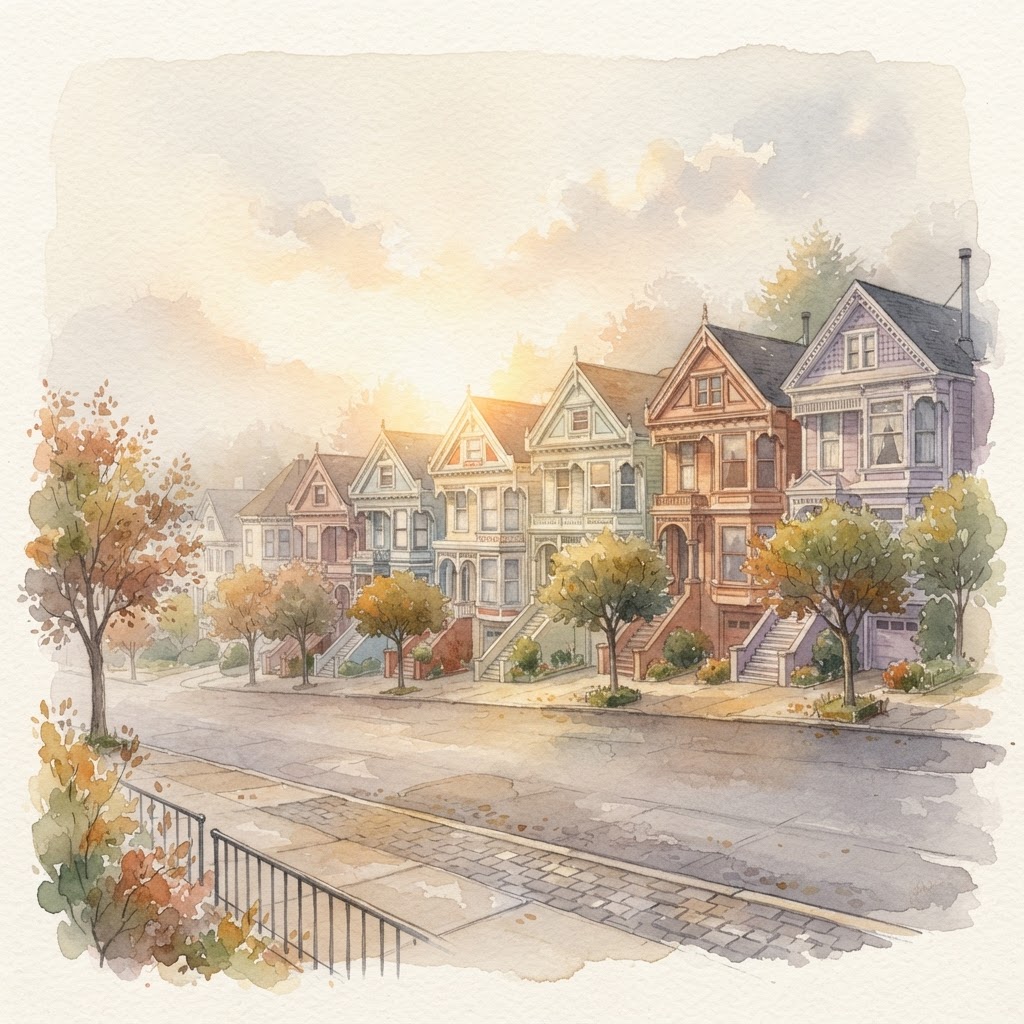
Everyone knows the Painted Ladies. They are on postcards, in opening credits, in the background of a thousand tourist photographs. But most people see them from across the park at Alamo Square, standing in a row, posing for a picture, and then moving on. What they miss is the texture.
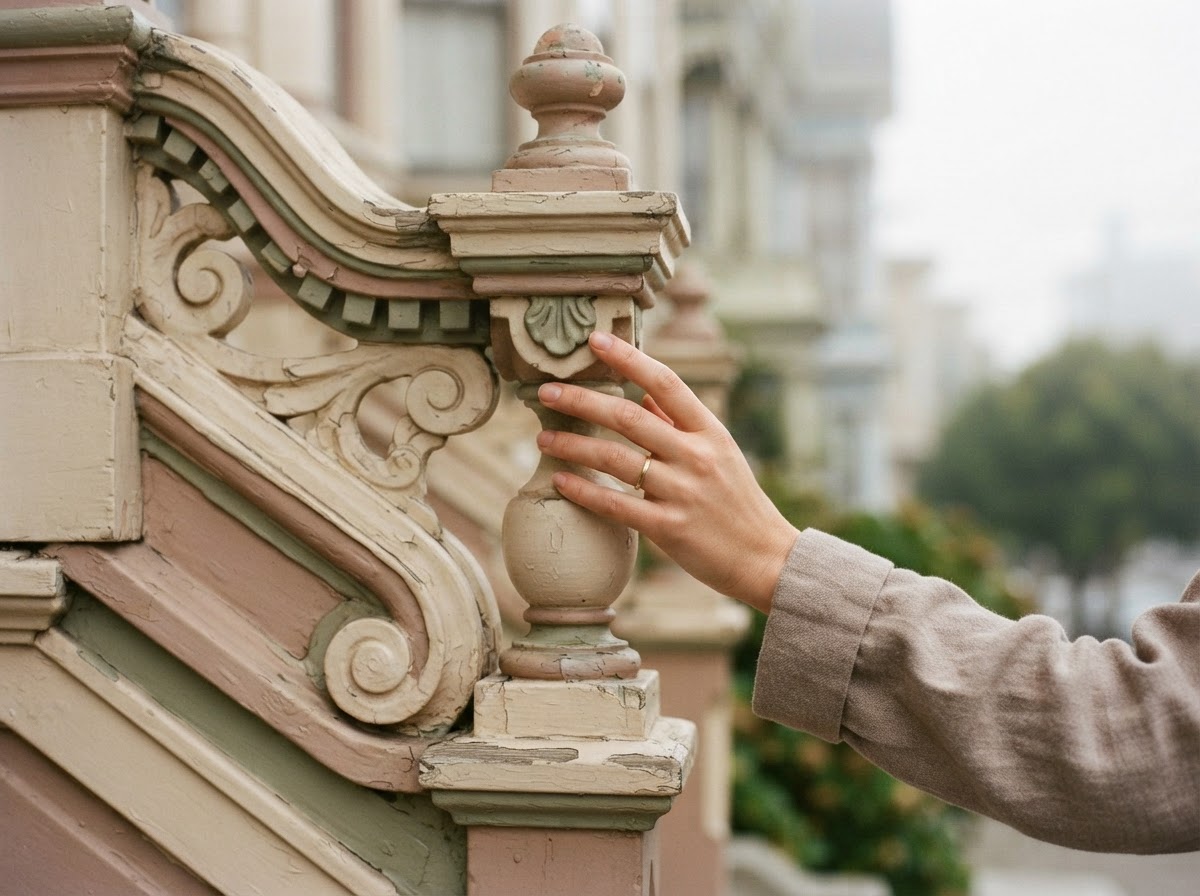
Stand close to a Victorian in San Francisco — not the Painted Ladies specifically, but any of the thousands of Victorians that line the streets of the Western Addition, the Mission, Pacific Heights — and you will see what I mean. The detailing on these houses is extraordinary. There is fish-scale shingles, carved corbels, sunburst patterns, turned spindles, and dentil molding. There are colors that don't exist in nature — deep burgundy, teal, mustard yellow, eggplant — applied with a precision that borders on obsession.
These houses were built between 1850 and 1900, during a period when San Francisco was growing faster than any city in the world. The builders were not architects in the traditional sense. They were carpenters and craftsmen, many of them immigrants, who brought their own traditions and mixed them with whatever materials were available. The result is a style that is uniquely San Franciscan — ornate, playful, and entirely unconcerned with restraint.
The Philosophy of Ornament
I think about ornament a lot. In sobriety, you learn to appreciate the things that serve no purpose. A carved corbel does not hold up the house any better than a plain one. A sunburst pattern on a gable does not keep the rain out. These things exist purely for beauty, purely for the pleasure of the person who made them and the person who sees them.
There is a tendency, in our culture, to value efficiency above all else. To strip away the unnecessary, the decorative, the excessive. But what is the point of a life that is only functional? What is the point of a house that only keeps the rain out?
The Victorians of San Francisco are a rebellion against the purely functional. They are a city's way of saying: we are here, we are excessive, we are beautiful, and we are not sorry.
How to See Them
Walk the streets of the Western Addition on a weekday morning. Start at Alamo Square, but don't stay there. Walk south on Steiner Street, then east on Page. Turn down any side street. You will find houses that no postcard has ever featured, with detailing that will stop you in your tracks. Bring a coffee. Take your time. No one is rushing you.
The Guides Hold More
This is where the story ends — but not where the city does. The Quiet City Guide holds the routes, the timed itineraries, and the quiet corners I couldn't fit here. It's your official adventure, carried in your pocket.
— Lane
Questions & Answers
Where are the Painted Ladies located?
The famous row of Painted Ladies faces Alamo Square Park, on Steiner Street between Fulton and Hayes. But the story encourages walking the surrounding Western Addition streets to find equally detailed Victorians without the crowds.
Are the Painted Ladies the only Victorian houses worth seeing in San Francisco?
No — they're just the most photographed. Thousands of Victorians line the streets of the Western Addition, Pacific Heights, and the Mission, many with detailing more intricate than the famous row. The quiet side streets are where the real texture lives.
What's the best time to photograph Victorian houses in San Francisco?
Weekday mornings, before 10 a.m., when the light is soft and the streets are empty. Avoid weekends, when Alamo Square draws crowds. The pastel colors of the houses read best in diffused, overcast light.