Some places don’t reveal themselves on the first encounter. An afternoon on Clement Street — a bookstore, a bowl of dim sum, a cup of tea — and the foggy Richmond District I was so certain I wasn’t going to like.
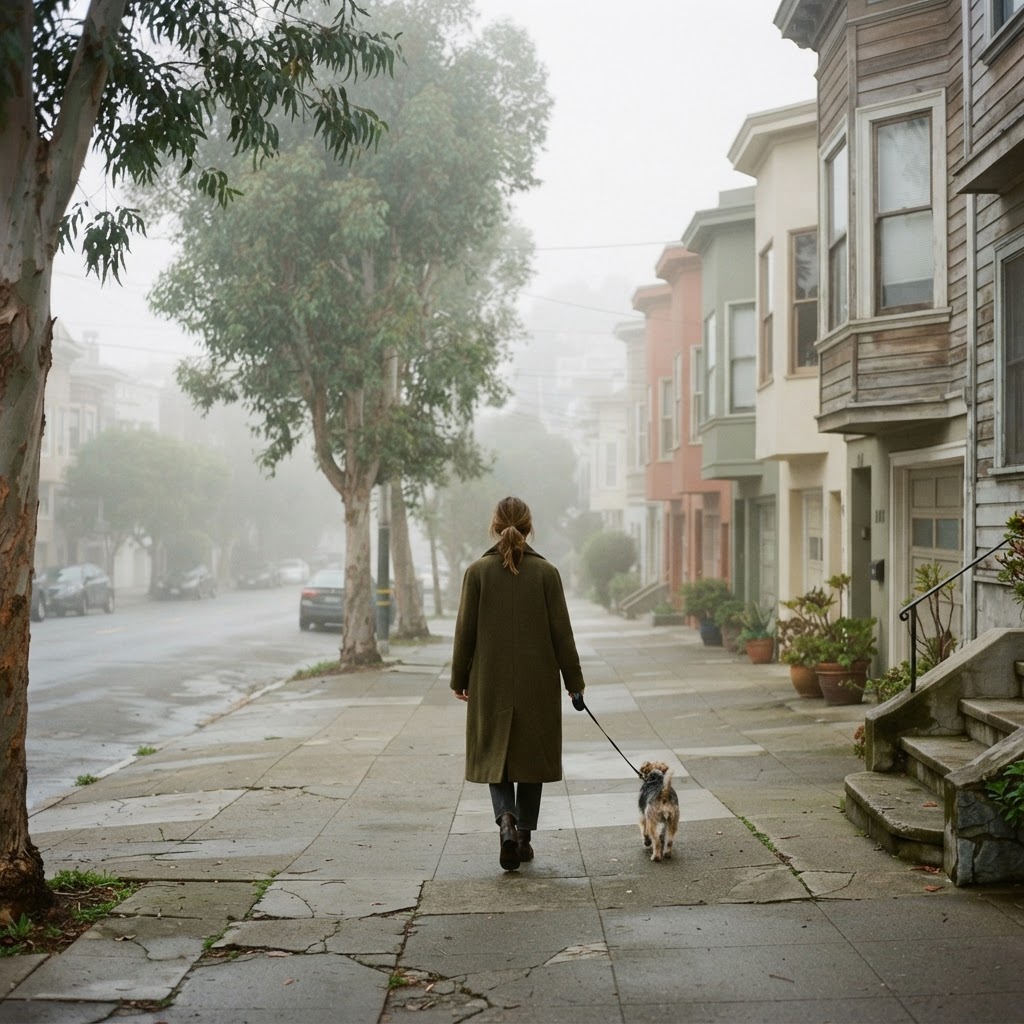
I did not want to live in the Richmond District. I should probably begin there, because revisionist history is tempting when you’ve come to love a place. It would be easy for me to tell you now about Clement Street, Green Apple Books, Sunday mornings at the farmers market and walks through Mountain Lake Park and pretend I immediately understood the charm of this part of San Francisco. I did not. I moved there begrudgingly with my then-fiancé, carrying all the certainty of someone who had already decided which version of San Francisco suited her. The Richmond was not it. It was foggy and cold, and the farther west you went, the more the summer seemed to disappear. There were mornings when the fog sat so heavily over the neighborhood that it felt less like weather and more like a permanent architectural feature.
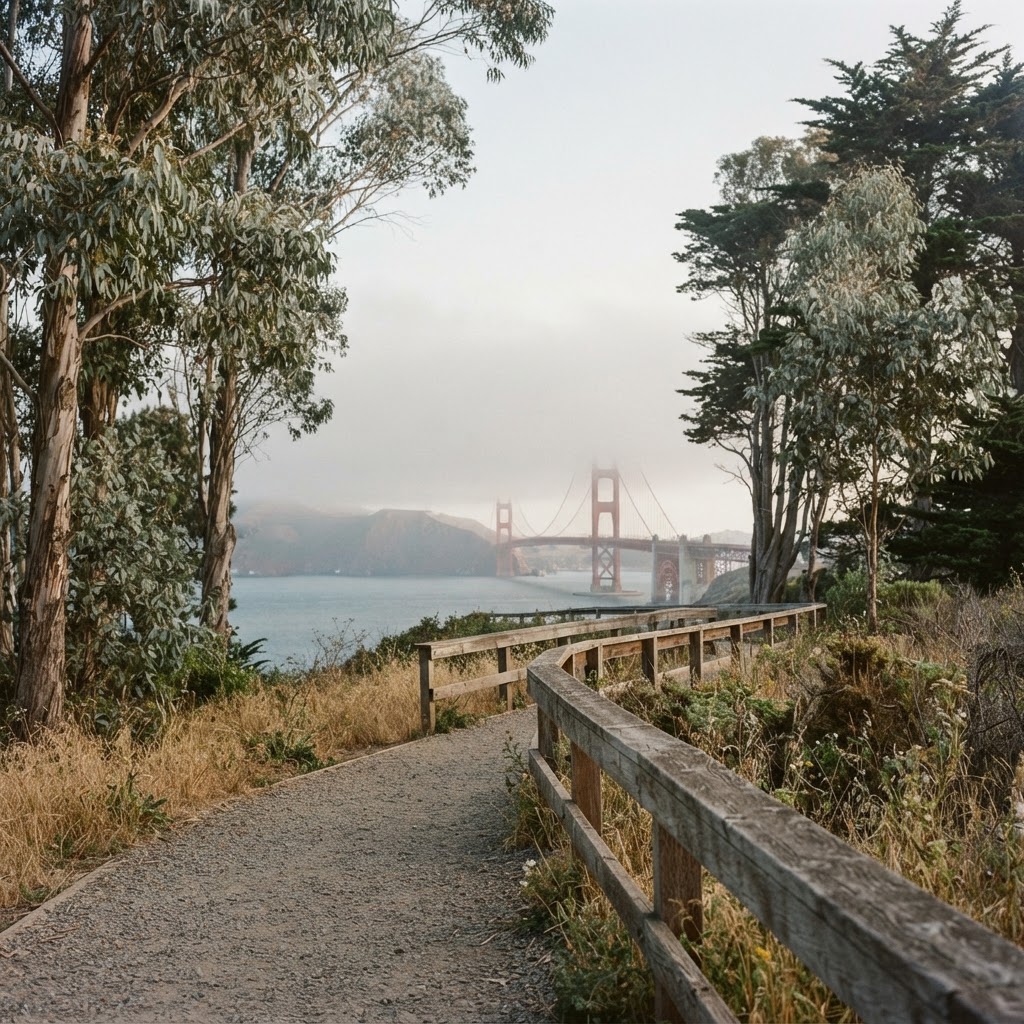
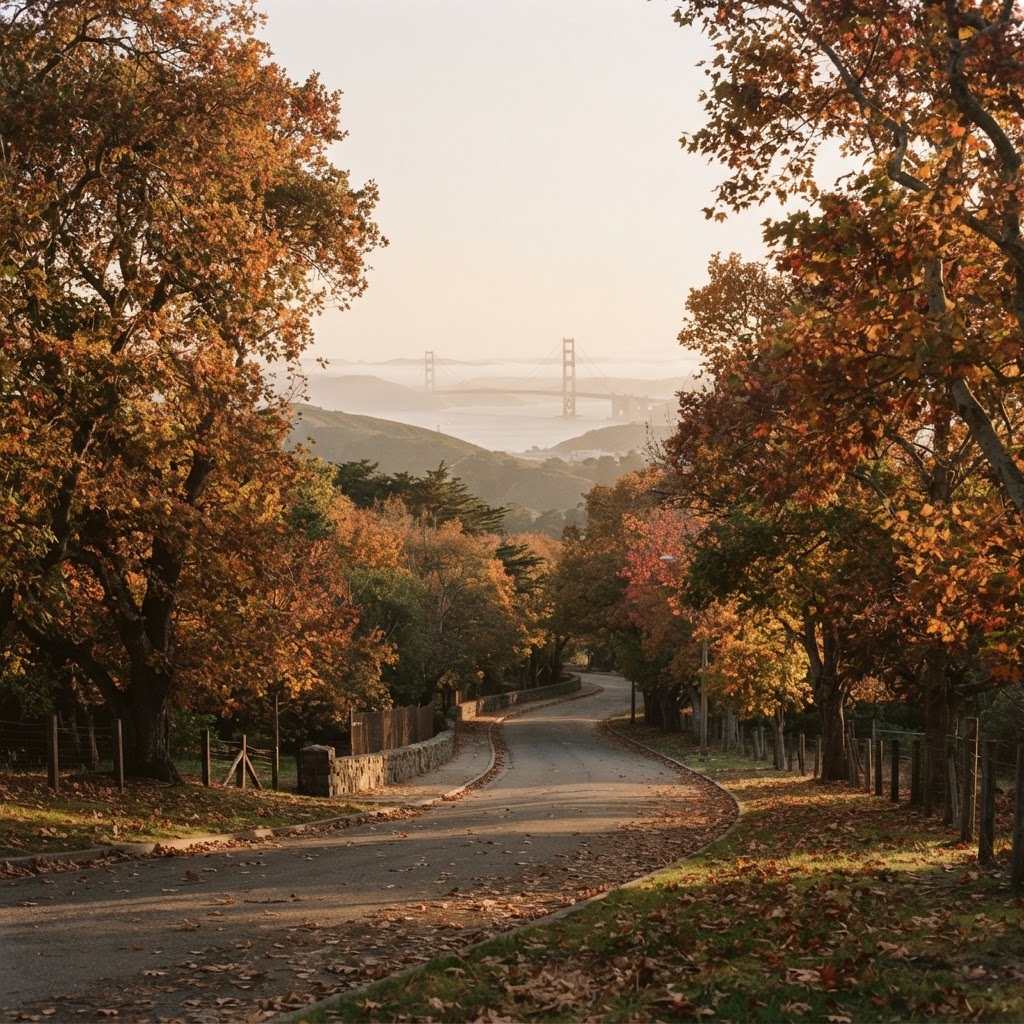
But San Francisco has a wonderful way of dismantling your certainty one block at a time. I started walking the neighborhood with my dogs. I found Mountain Lake Park, tucked along the southern edge of the Presidio, and began to understand the peculiar luxury of having something that wild woven into ordinary city life. Clement Street slowly became my street: the place for groceries, lunch, a walk, a book, a conversation, something I didn’t know I needed until I saw it in a window. Eventually, I had my baby at home on California Street, my two dogs there with us, and the neighborhood I had resisted became the setting for one of the most intimate chapters of my life. This is what places can do when we stop insisting they reveal themselves immediately.
I lived there before Clement Street became quite the destination it is now, before an afternoon in the Inner Richmond became something people deliberately put on a San Francisco itinerary. There is a little Gen X part of me that would like credit for being there before the hipsters discovered it, although that is ridiculous because generations of families and merchants had created this neighborhood long before any of us decided it was cool. Clement has always been a deeply layered street, shaped by immigrant communities, family businesses, restaurants, markets and people who actually live nearby. What has changed is that the rest of the city seems to have realized what was there all along.
And that, in many ways, is what The Sober Lens is about. It isn’t simply about finding places where alcohol isn’t the main event. It’s about learning to recognize what was there all along.
Begin With a Book You Weren’t Looking For
If I were sending you to Clement Street for an afternoon, I would begin at Green Apple Books, the original Clement Street store that has been part of the neighborhood since 1967. Not because I think you need another book. If your house looks anything like mine, you almost certainly do not. I would send you there because bookstores are one of the few remaining places where wandering without a clear objective is still socially acceptable.

Green Apple rewards that kind of wandering. It isn’t a pristine, highly engineered bookstore where every object appears to have been placed by someone with a degree in retail psychology. It has accumulated itself over decades. There are stairs and shelves and corners, new books beside used books, staff recommendations and titles you haven’t seen stacked twenty times on an airport table. It asks something different of you than the algorithm does. Instead of telling you what people like you also liked, it gives you the chance to become interested in something you didn’t know existed.
That distinction matters to me more than it once did. We have become extraordinarily good at eliminating surprise from our lives. We know what a restaurant looks like before we enter it, what everyone recommends ordering, which table photographs best and what hundreds of strangers thought about the service. We can preview the hotel room, inspect the hiking trail and read the ending of the book before deciding whether to buy it. Convenience is wonderful, but there is a cost to knowing everything before we arrive. We lose the experience of discovery.
So when you go into Green Apple, resist the urge to accomplish anything. Pick up the strange book. Read the first page. Wander upstairs. Put something back. Change your mind. Ask a bookseller what they’ve read recently that surprised them. Leave with one book instead of six, preferably the one you had absolutely no intention of buying when you walked through the door.
Then step back onto Clement Street and keep walking.
Let Lunch Interrupt the Plan
Clement is particularly good when you haven’t overplanned it. The blocks invite wandering because almost everything is mixed together: restaurants, produce markets, bakeries, cafés, neighborhood shops and businesses that have survived several versions of San Francisco. The street doesn’t feel constructed for visitors, even though visitors have increasingly discovered it. People are buying dinner ingredients. Someone is walking a dog. Parents are maneuvering strollers. Someone else is carrying three grocery bags and trying to remember where they parked. It remains a functioning neighborhood, which is precisely why it is worth visiting.
If it’s Sunday, the Clement Street Farmers Market changes the rhythm entirely. This is one of the places that eventually made me fall hard for the neighborhood. Farmers markets are often treated as another attraction now, but I still think of them as a kind of weekly civic ritual. You see what is growing, what season you’re actually in and who lives around you. You stand beside strangers squeezing peaches and arguing internally over the price of tomatoes. You buy flowers you didn’t need. You talk to someone who grew your food. For an hour, eating becomes connected to something more tangible than clicking “reorder.”
By lunchtime, I would head toward dim sum. Clement Street and the surrounding Richmond are exactly where I want to be when I want dumplings, and I wouldn’t make this part too precious. Look around. See where people are going. Order something familiar and something you can’t immediately identify. If you’re traveling alone, don’t treat that as a problem to solve. Sit down and eat.
I have become increasingly interested in the way we behave when no one else is there to witness our lives. Eating alone used to feel to me as though something were missing. There was an empty chair, and the empty chair seemed to require an explanation. Now I see it differently. There is an enormous distinction between being alone and waiting for someone. Once you stop waiting, the entire experience changes. You taste the food. You watch the room. You hear conversations you aren’t part of. You discover that your own company isn’t the unfortunate interval before the real event begins.
If dim sum isn’t calling you, there are other directions to wander. Palmetto Superfoods is an easy stop when something fresh and colorful sounds better, and Blue Danube Coffee House is one of those neighborhood places that has lodged itself in my memory. I still think about the mint chip smoothie. I could attempt to make this more profound, perhaps connect mint chips to neurobiology or the meaning of life, but sometimes a mint chip smoothie is simply very good, and I believe we should retain the intellectual capacity to recognize that.
Tea Requires You to Pay Attention
From Green Apple, you’re also only a short walk from Aroma Tea Shop on 6th Avenue, and this is where I would slow the afternoon down even further. Tea is an interesting antidote to the way many of us move through cities because good tea asks for participation. There is aroma, temperature, steeping, the first taste and then what remains after you’ve swallowed. You cannot experience all of it while doing five other things, although we certainly try.
Go in curious rather than knowledgeable. Ask about a tea you’ve never tried. Smell it. Let someone explain where it comes from and why it tastes the way it does. Sit with the slightly uncomfortable possibility that you do not need to know anything in advance. I think we underestimate how pleasurable it is to be a beginner.
This is also where sobriety has changed travel for me in ways that have very little to do with removing alcohol. For years, the cultural shorthand for experiencing a city has been remarkably narrow. We are told to find the cocktail bar, the rooftop drink, the winery, the local beer, the bottle at dinner. Alcohol became so intertwined with leisure that we began confusing drinking with experiencing. Remove it, and at first there can be an odd blank space. What exactly are we supposed to do?
The answer, I’ve discovered, is much more interesting: you notice.
You notice the bookseller who has very strong feelings about a novel you’ve never heard of. You notice steam rising from a bamboo basket. You notice the smell of tea leaves when hot water first hits them. You notice the old woman choosing vegetables beside you at the farmers market and the father trying to negotiate a pastry with a toddler. You notice that San Francisco’s fog is not simply gray; it moves, softens edges, changes the light and makes entire neighborhoods feel quieter.
You notice because you’re there for the whole thing.
The Places We Resist
When I think about my years in the Richmond now, I don’t remember my resistance nearly as vividly as I remember what eventually replaced it. I remember Mountain Lake Park and my dogs. I remember walking Clement. I remember the farmers market. I remember California Street and having my baby at home. I remember becoming attached to routines I hadn’t planned and a neighborhood I hadn’t chosen.
There is a lesson in that I find increasingly relevant as I get older. We make decisions quickly now, not only about neighborhoods but about almost everything. We swipe, rank, review, scroll and move on. We are asked constantly whether we like something, often before we’ve had enough time to know. Our digital lives are built around immediate preference: more of this, less of that, show me something better.
But some of the most important things in my life have required a longer exposure.
Sobriety was like that. Meditation was like that. Motherhood was certainly like that. San Francisco has been like that. None of them can be adequately understood from the first encounter, because the first encounter is often filled with our own expectations. You have to stay long enough for reality to interfere.
Maybe that is one reason I’m so interested now in intentional travel and intentional living. I don’t want to consume places anymore. I want to develop relationships with them. There is a difference. Consumption asks, What can I get from this? Attention asks, What is here?
Clement Street is a good place to practice the second question.
Go into Green Apple without knowing what book you’ll buy. Walk outside without immediately consulting the next pin on your map. Eat dim sum for lunch, or have an açaí bowl at Palmetto, or sit at Blue Danube with that mint chip smoothie. Walk around the corner for tea at Aroma. If it’s Sunday, wander through the farmers market. And if you have time, keep walking toward Mountain Lake Park, the place that helped turn a neighborhood I didn’t want into one I eventually couldn’t imagine not having known.
I could give you an optimized itinerary with exact times and the most efficient route between every stop, but that would defeat the point. The real itinerary is simpler: leave enough room for something you didn’t plan to happen.
That is the Sober Lens I want to bring to San Francisco, and eventually to travel far beyond it. Sobriety may have been what first cleared my vision, but presence is what keeps changing what I see. A bookstore can do that. So can a bowl of matcha, an unexpected garden, Ocean Beach on a gray morning or sitting alone at a restaurant and realizing you aren’t waiting for anyone.
Sometimes an entire neighborhood can do it, too. Especially the one you were so certain you weren’t going to like.
See More of San Francisco This Way
Sober in San Francisco is the intentional guide I created for people who want more of this city than a checklist of attractions. It’s for visitors and locals, whether you’re sober, sober-curious, alcohol-free, pregnant, training for something, taking a break from drinking or simply interested in what happens when you slow down enough to experience a place differently.
The guide takes you into the San Francisco I love: neighborhood places, walks, food, quiet corners, unexpected experiences and things worth noticing. Not because they’re all famous, and not because an algorithm says you need to see them, but because I believe a memorable city is built from the moments you actually remember being present for.
If this afternoon on Clement Street sounds like your kind of San Francisco, come explore the rest of the city with me in the Sober in San Francisco guide.
The Guides Hold More
This is where the story ends — but not where the city does. The Quiet City Guide holds the routes, the timed itineraries, and the quiet corners I couldn't fit here. It's your official adventure, carried in your pocket.
— Lane
A Capacity Moment™
Try this on one block of Clement Street: put your phone away and don’t decide where you’re going. Notice three things you would have walked past — a book in a window, the smell of something steaming, the way the fog changes the light. The point isn’t the block. The point is the attention you brought to it. Stay long enough, and the neighborhood stops being scenery and becomes a place you’re actually in.
Local Tip
Green Apple Books sits at 506 Clement Street and is open daily — give yourself an unhurried hour, not a quick browse. The Clement Street Farmers Market runs Sunday mornings along Clement between 4th and 8th Avenues; arrive before 10am for the calmest stroll. Park a couple of blocks off Clement — the side streets are quieter and meters are easier to find than on the main drag.
I still have a dog-eared copy of a book I bought at Green Apple the week we moved in, when I was trying very hard to dislike the neighborhood. I couldn’t tell you what’s inside it. I keep it because of the afternoon I bought it, and the bookseller who handed it back and said, 'I think this one found you.' He was right, and so was the neighborhood. Both of them took longer than I expected — and both of them changed what I was looking for.
— Lane
Questions & Answers
Where is Clement Street?
Clement Street runs east–west through the Richmond District in northwest San Francisco, roughly from Arguello Boulevard out toward 33rd Avenue. The lively stretch most people mean when they say 'Clement' sits between Park Presidio Boulevard and about 8th Avenue.
Is Green Apple Books still open?
Yes. The original Green Apple Books has been on Clement Street since 1967 and remains independently owned, with new and used books spread across several connected rooms and an upstairs. It’s open daily; check their website for current hours before you go.
When is the Clement Street Farmers Market?
The Clement Street Farmers Market runs on Sunday mornings, typically from spring through late fall, along Clement between 4th and 8th Avenues. Confirm current dates on the Pacific Coast Farmers’ Market site before planning your afternoon around it.