A bowl of matcha asks you to stop, and that is precisely why it belongs in The Sober Lens.
Matcha is having a moment, although I suspect matcha itself would be perfectly happy if we stopped making such a fuss about it. Somewhere along the way, an old Japanese tea tradition became a lifestyle accessory: iced in plastic cups, striped with strawberry purée, topped with cold foam, photographed against expensive handbags and consumed while walking very quickly to somewhere else. I am not opposed to any of this. I have never believed intentional living requires becoming insufferable. If someone wants strawberry matcha with cold foam on a Tuesday afternoon, I hope it is excellent. But underneath all the enthusiasm is something quieter that interests me much more. A bowl of matcha asks you to stop, and that is precisely why it belongs in The Sober Lens.
We have become very efficient at being almost everywhere except where we actually are. We stand in line scrolling, walk while listening, eat while watching and talk to one person while checking to see whether someone else has contacted us. Matcha is particularly good at exposing this impatience because there isn't much to hide behind. Good matcha can be vegetal, slightly bitter, sweet, deeply savory and far more complex than the vaguely green beverage many of us have been handed under its name. When it's prepared simply, there is nowhere for mediocre tea to disappear, and there is nowhere for you to disappear either. You have to taste it.
Start With the Bowl
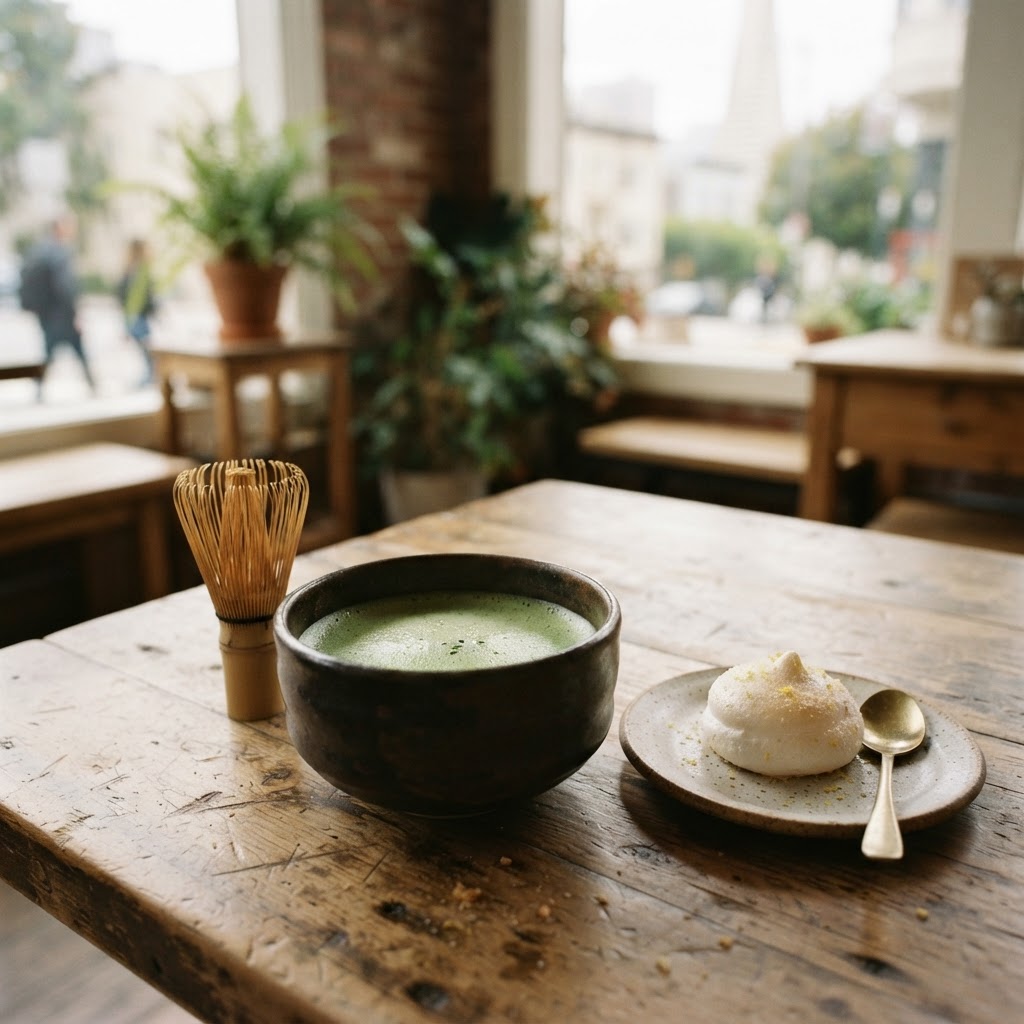
If you want to understand what I'm talking about, begin at Stonemill Matcha on Valencia Street in the Mission. Don't begin with one of the elaborate drinks. Order the hand-whisked matcha, prepared traditionally and served with small yuzu meringues. The simplicity is the point.
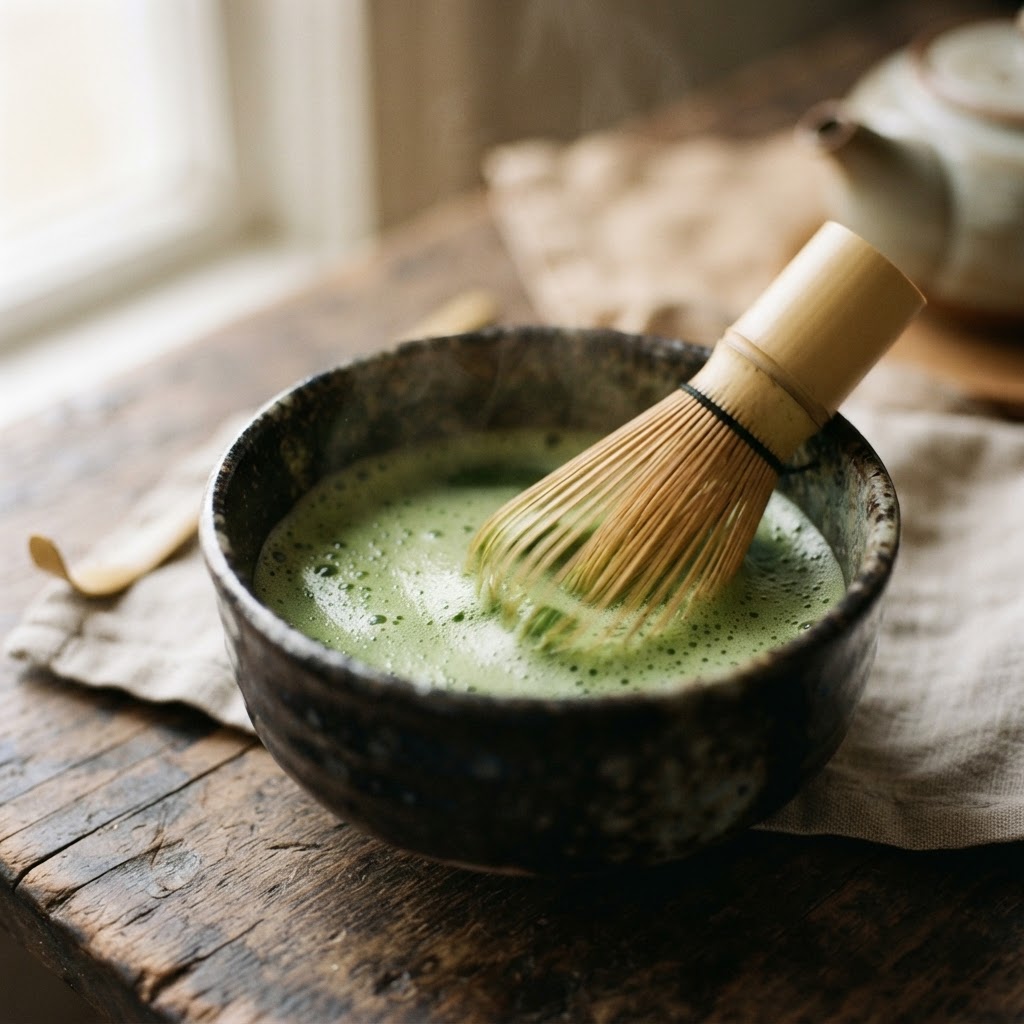
Find a place to sit and resist the strange modern impulse to document the experience before you've actually had it. Look at the bowl before you drink from it. Notice the color. Smell it. Take the first sip without reaching for your phone. Pay attention to the bitterness before deciding that bitterness is bad, then notice what happens afterward. High-quality matcha has a depth that reveals itself slowly, which is one reason drowning it in sugar before tasting it seems a little like walking into the Louvre and immediately putting on a blindfold.
There is also something interesting about holding a bowl with both hands. We rarely hold anything that way anymore. One hand holds the phone while the other performs the rest of our lives. A bowl requires a small surrender of multitasking. Your hands are occupied. You cannot scroll. For a few minutes, there is simply you and the thing in front of you. Have the latte afterward if you want one. Presence does not require suffering. I simply want you to taste the matcha first, before you change it.
Go Where They Are Milling It
Across the city in the Outer Richmond, something genuinely unusual is happening at Constance Tea & Matcha on Balboa Street. The family-run shop opened in 2026 and mills tencha, the specially processed tea leaves used to make matcha, on Japanese stone mills inside the shop. This is the kind of place I love sending people because it gives you a reason to cross the city and experience a neighborhood rather than checking another attraction off a list.
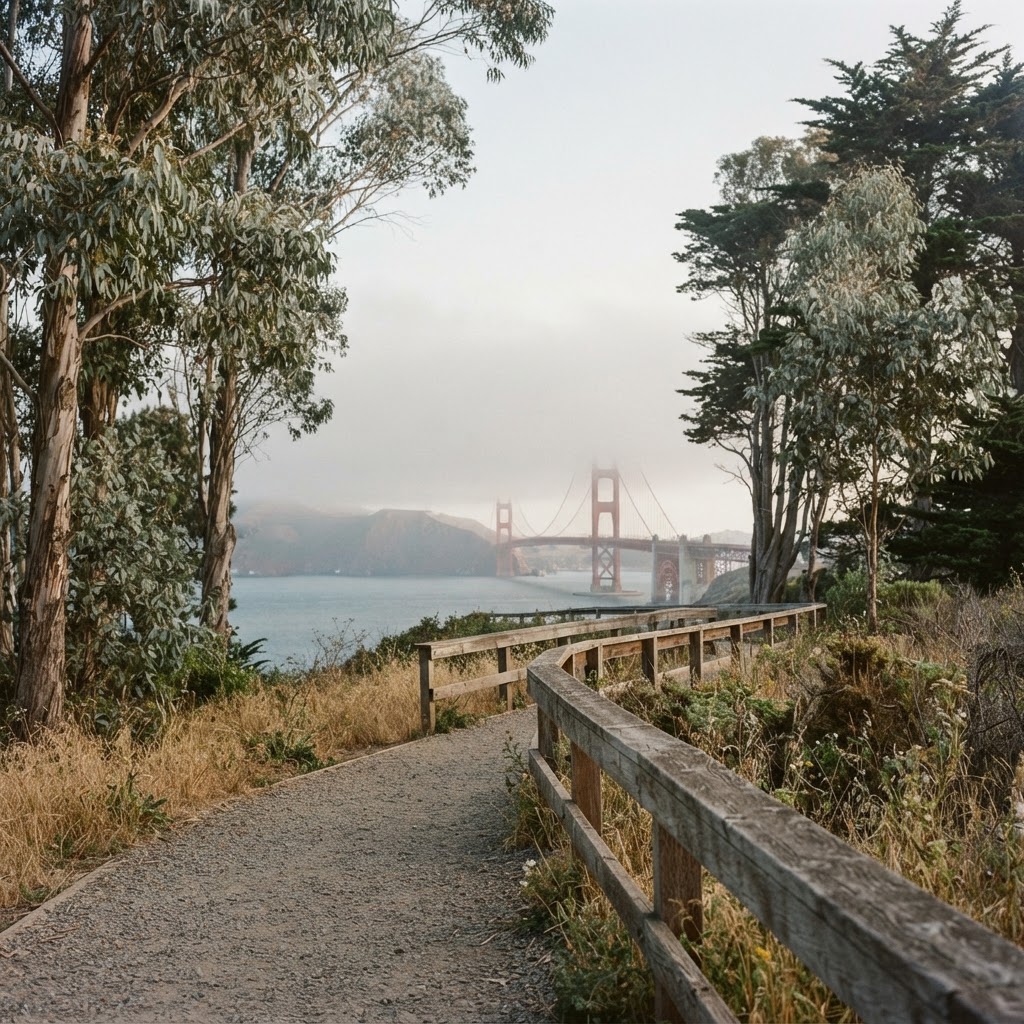
Go west and watch San Francisco change. The city gets quieter as you move toward the ocean. The temperature drops, the sky may decide that color is unnecessary and the fog begins doing that thing San Francisco fog does, where it doesn't merely obscure the landscape but seems to soften the entire world around you. Then walk into a shop where someone is taking something very old seriously.
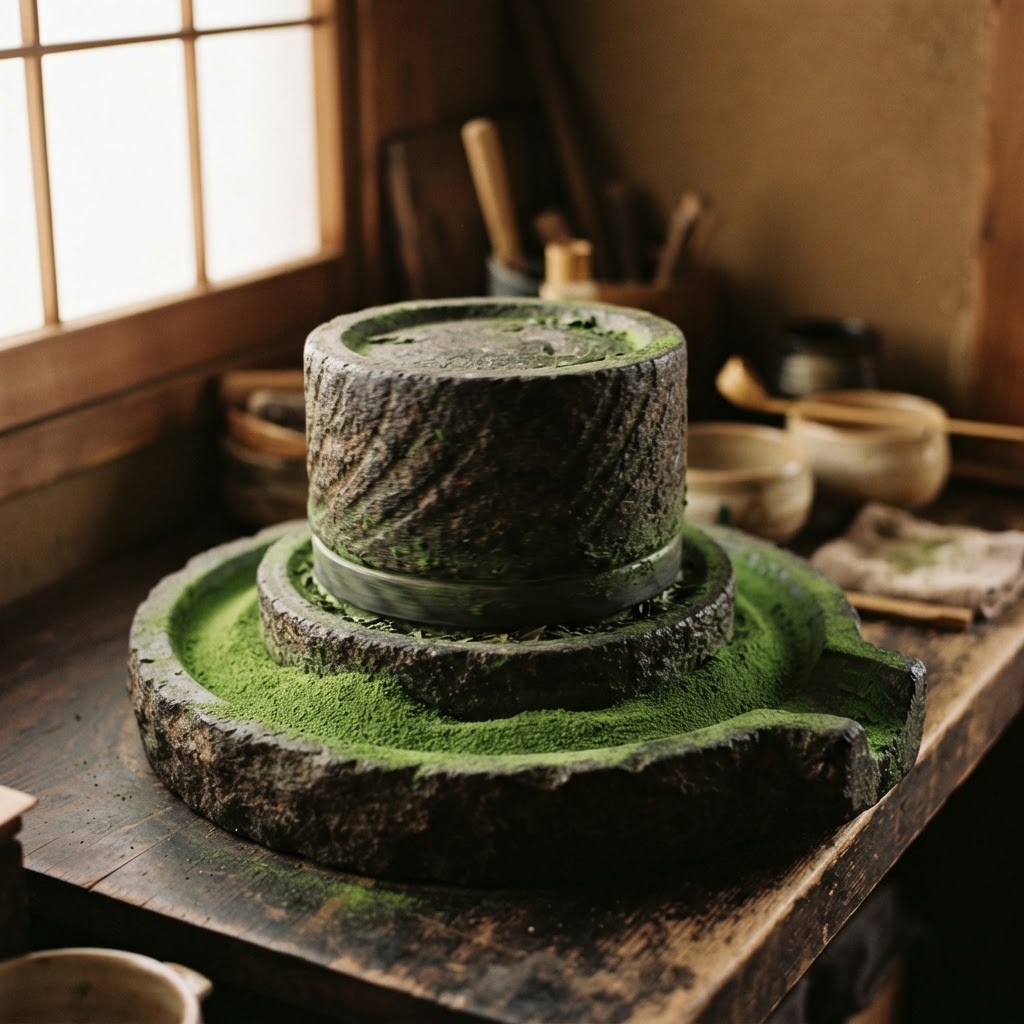
Tea plants used for matcha are shaded before harvest, which changes the chemistry and flavor of the leaves. After harvesting and processing, the resulting tencha is slowly ground into the extraordinarily fine powder we recognize as matcha. At Constance, that final transformation is happening in front of you rather than months earlier and thousands of miles away. There is something wonderfully countercultural about watching a stone mill slowly make tea in 2026. A stone mill has no interest in our productivity, and neither does a bowl of tea.
Let Matcha Take You Into Japantown
For the third stop, I would take you to Maruwu Seicha in Japantown, because matcha makes more sense when it leads somewhere beyond itself. Order your tea, but don't make the tea shop your only destination. Walk through Japan Center. Look at the ceramics and notice the bowls and teapots rather than treating them as decoration around the thing you've come to consume. Sit somewhere longer than necessary.
You may begin to understand why the bowl itself matters. The object changes the experience. So does the preparation. So does the decision to sit instead of walk. We have become accustomed to believing an experience must be spectacular before it deserves our attention, particularly when we travel. Meanwhile, some of the experiences that stay with us longest are remarkably ordinary. A conversation. A smell. A street. A bowl sitting on a wooden table on an afternoon when we weren't in a hurry.
The Matcha Shop Inside the Running Store
There is one more stop I want you to know about because it is exactly the sort of slightly unexpected San Francisco collision I love. In Noe Valley, Running Wylder is a small independent running lifestyle shop on Castro Street, and inside you'll find the Two Two One matcha and coffee pop-up. It also has a community around movement, including its Sunday run, which means you can move through the neighborhood, come back, have a matcha and talk to people you might not otherwise have met.
It also gives us a chance to reconsider what wellness has become. We track steps, heart rate, recovery scores, sleep stages and Zone 2 minutes until occasionally the pursuit of health begins looking suspiciously stressful. Movement can be simpler than that. Walk. Run. Take the hill slowly. Talk to somebody. Let your body experience movement as something other than a performance evaluation. There is a great deal of nervous-system regulation hidden inside ordinary human experiences that we've somehow decided need an app.
What Do We Do Instead of Drinking?
There is a larger reason I wanted matcha in The Sober Lens, and it has almost nothing to do with caffeine. When people remove alcohol from their lives, one of the first questions that appears is surprisingly practical: what do I do instead? The question makes sense because alcohol occupied far more territory than the liquid in the glass. It marked transitions. Work was over, so we poured a drink. Friends arrived, so we opened wine. We celebrated, mourned, flirted, relaxed and rewarded ourselves with the same substance.
Take it away and there can initially be a strange amount of empty space. I don't think the answer is to frantically fill it with an alcohol substitute. There are wonderful nonalcoholic drinks now, but simply replacing one beverage with another misses the more interesting opportunity. The better question is what becomes possible inside the space. Tea is one answer. Walking is another. Books, food, conversation, gardens, neighborhoods, the ocean, noticing the light changing on a street you have walked a hundred times are all answers. They are simply ways of being awake for your own life.
That is ultimately what interests me about matcha. It is the ritual and the attention the ritual asks of you. A bowl, hot water, a whisk, two hands and a few minutes can be surprisingly instructive in a culture relentlessly asking us to do more, consume more and move faster. Sobriety taught me a great deal about what I didn't need, but over the years it has become far more interesting to me as a way of understanding what I do want. I want to taste what I'm eating. I want conversations I was actually present for. I want enough space in my life for something small to register. A bowl of matcha can do that.
I call this a Capacity Moment — a small interruption in automatic behavior, a chance to notice how much stimulation you are carrying and whether you have room for what is happening right now. I used to think capacity was largely about how much we could handle. I see it differently now. Capacity isn't simply how much more we can squeeze into a life. It is also how fully we can inhabit the life that is already happening. Sometimes the practice isn't adding another tool. Sometimes it is putting everything else down long enough to taste the tea.
Take the Sober Lens Into the City
A bowl of matcha is one tiny doorway into the San Francisco I want to show you. Sober in San Francisco is my intentional guide for visitors and locals who want to experience this city through food, neighborhoods, walks, hidden places, rituals and experiences that don't require a cocktail to make them memorable. It isn't a directory of everything you could possibly do. Google already has that job. This is a curated city — the places I would send you and the corners that reveal themselves when you aren't racing toward the next reservation.
So start with the matcha. Hold the bowl with both hands, give it ten minutes of your actual attention and don't worry about making the moment productive. Then walk outside and keep looking. There is an entire city waiting for you to experience it differently, and Sober in San Francisco will show you where I think you should begin.
The Guides Hold More
This is where the story ends — but not where the city does. The Quiet City Guide holds the routes, the timed itineraries, and the quiet corners I couldn't fit here. It's your official adventure, carried in your pocket.
— Lane
A Capacity Moment™
When you get your matcha, give yourself five minutes before you move on. No phone, no photograph, no checking where you're going next. Put both hands around the bowl and notice the temperature. Smell the tea before you drink it. Taste the bitter, grassy, sweet or savory notes without immediately deciding whether you like them. Then turn your attention inward and get curious: can you allow the experience in front of you to be complete without adding anything to it?
Local Tip
Stonemill Matcha is at 561 Valencia Street in the Mission. Constance Tea & Matcha is out at 3512 Balboa Street in the Outer Richmond — about 40 minutes from the Mission by Muni. Maruwu Seicha is inside Japan Center at 1737 Post Street, and Running Wylder is at 1354 Castro Street in Noe Valley. Visit them in that order and you'll cross nearly the whole city.
I spent years drinking matcha from a paper cup while walking somewhere else before I ever actually tasted it. The first time I sat down with a properly whisked bowl, at a small shop that no longer exists, I realized I had been consuming matcha for years without ever really having had it. That moment changed the way I think about a lot of things, not just tea.
— Lane
Questions & Answers
Where can I get some of the best matcha in San Francisco?
I would start with Stonemill Matcha in the Mission, Constance Tea & Matcha in the Outer Richmond and Maruwu Seicha in Japantown, with Two Two One inside Running Wylder in Noe Valley as the unexpected fourth stop. I chose them because they offer very different experiences rather than four versions of the same trendy drink — one introduces you to a traditional bowl, another lets you experience freshly milled matcha, another becomes a doorway into Japantown, and the last connects matcha with movement, neighborhood and community.
Is matcha actually different from regular green tea?
Yes. With traditionally brewed green tea, leaves are steeped in water and then removed. With matcha, specially grown and processed tea leaves are finely ground into powder, whisked into water and consumed. You are drinking the leaf itself, which contributes to matcha's distinctive color, texture, flavor and concentration.
Does matcha contain caffeine?
It does, and the amount can vary considerably depending on the matcha, serving size and preparation. If you're sensitive to caffeine, pay attention to how your own body responds rather than assuming something marketed as wellness automatically belongs in your body. "Healthy" and "right for me" are not necessarily the same sentence.
Do I have to drink matcha traditionally to appreciate it?
Absolutely not. Have the latte. Try the strawberry matcha. Order it iced. Put oat milk in it. I am not interested in turning tea into another arena for perfectionism. I do think it's worth trying a traditionally prepared bowl at least once, because tasting matcha without all the additions gives you a completely different reference point. After that, drink what you actually enjoy.
Do I need to be sober to experience San Francisco through The Sober Lens?
No, and this is important. The Sober Lens grew out of my own decades of sobriety, but it isn't reserved for people who identify as sober. You might be sober-curious, alcohol-free, pregnant, training for a marathon, taking medication, taking a break from drinking, accompanying someone who doesn't drink or simply discovering that you don't particularly want alcohol to be the organizing principle of every social experience. The invitation is the same: slow down enough to notice more.